Help an autistic adult enjoy friendships, shared meals, and local life. Bring patience, curiosity, and care; learn alongside other staff through paid evening training.
Home guests, friend-making, meals, and activities.
Light house cleaning and walks to nearby events.
Driving is not required for this shift.
Main opening
Overnight standby
1 a.m.–9 a.m.
$17.40 per hour standby-only $30 per hour active support
May follow evening training if you are a good fit.
Stay inside the home; wake promptly and respond reliably.
You may sleep when help is not needed.
Moving into the room is not required.
Suitable aides may later be approved for full-time live-in work with a private bedroom, rent and utilities included at no charge. Selection, Housing Authority approval, and continued employment are required.
Daytime fill-ins
Day
9 a.m.–5 p.m.
$30 per hour
Daytime fill-ins welcome.
Community inclusion, advocacy, safe outings, community outreach, and friend interviews for Humboldt Friends.
Your own car, valid driver’s license, and appropriate insurance are required.
Required work expenses, including work use of the car, are reimbursed.
Current funded schedule
24 hours a day, seven days a week.Coverage is shared across staff.
Initial hiring
Part-time until a permanent aide is chosen.Individual shifts are agreed separately.
Location
ArcataJust blocks from Cal Poly Humboldt.
Payroll
Every two weeksMAINSL, the Financial Management Services (FMS) provider, handles payroll and payments.
Recording pay
Active direct-support work is paid at $30 per hour during any shift.
Standby and direct-support time are recorded separately. The two rates are not added together for the same time.
Overtime is paid when required by law.
Shared duties
Support daily life and friend-making
About the person
An intelligent, playful, and goofy autistic adult.
Enjoys advocacy, patterns and data, different cultures, and the arts.
All shifts can expect silly humor. Respect everyone’s boundaries.
Other staff help with training, coordination, and emergencies.
On every shift
Respect the participant’s choices, privacy, dignity, and independence.
Help with friend-making and participant-approved invitations for meals and activities.
Follow prescribed instructions for medication, observation of medical events, diet, and occasional doctor-prescribed activities.
Stay within your training and authorization; ask before unfamiliar medical-support tasks.
Coordinate with staff; contact emergency services when needed.
Make local life more welcoming
Enjoy the fun of friend-making, shared meals, local outings, and activities.
Help the participant build meaningful local connections through the Humboldt Friends project, guided by their interests and choices.
Help promote Humboldt Friends by sharing community activities and opportunities to connect. Respect the participant’s privacy.
MAINSL timekeeping checks location when you clock in and out; it does not continuously track you.
Room and household
Standby and living in are separate
Standby shifts now
You can work agreed shifts without moving in.
Taking standby shifts does not guarantee a permanent live-in role.
Room use and a future live-in aide
The room is available to fill-in aides until a full-time aide is chosen.
Moving in requires Housing Authority approval and continued aide work.
It is not a regular room rental or a separate lease.
Included with approved room use
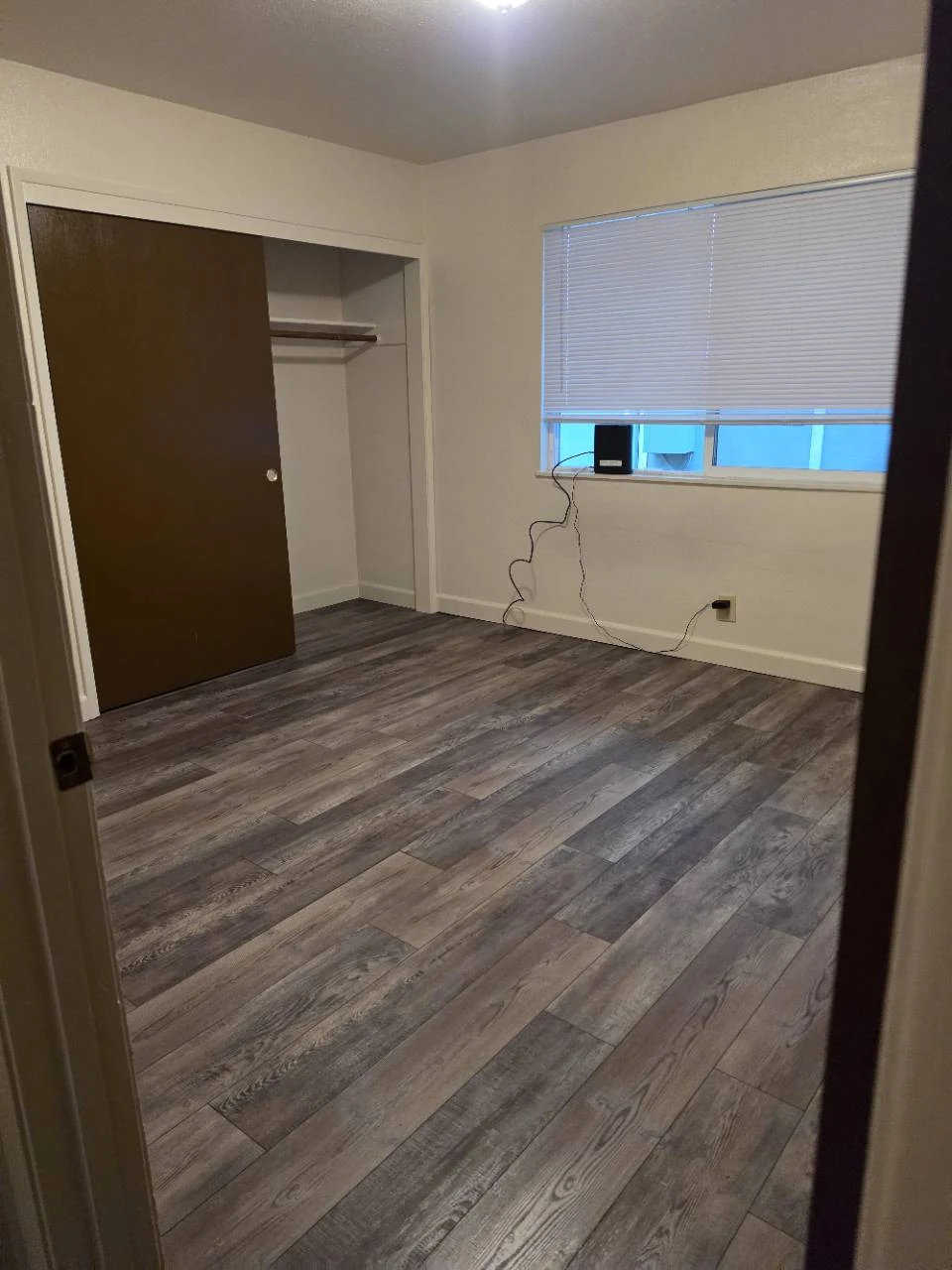
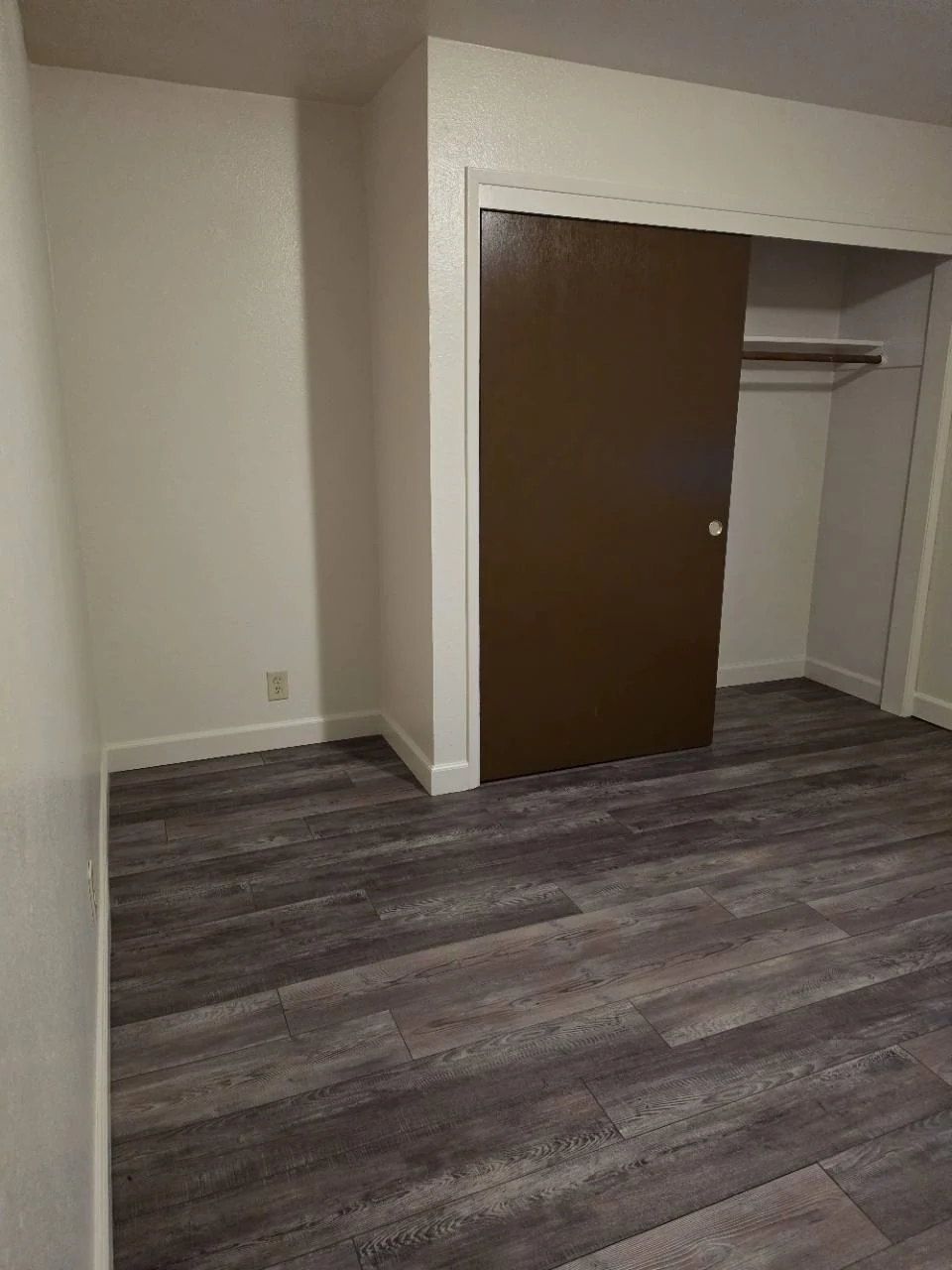
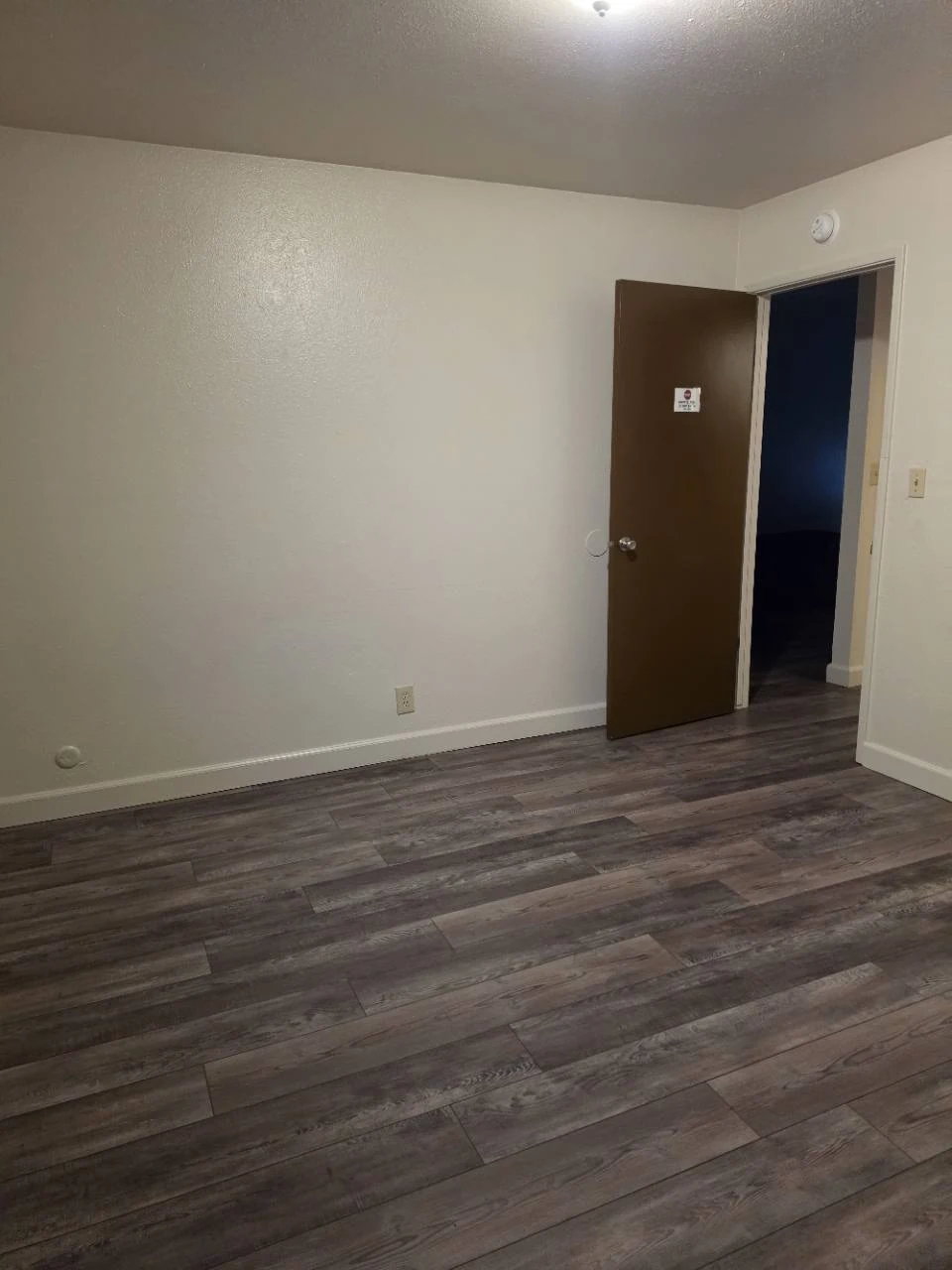
Unfurnished private bedroom and shared bathroom.
Rent, utilities, and high-speed Wi-Fi.
Kitchen and laundry access.
Food storage: included / not included
Refrigerator space — included: The two bottom refrigerator bins and the bottom shelf for the aide’s personal food.
Freezer space — not included.
Kitchen storage — included: One kitchen storage bin.
Meals or groceries — not included.
Clearly label these refrigerator spaces and their food “Live-in aide — personal food” so staff do not use it for the client.
Access and parking
Just blocks from Cal Poly Humboldt. About one block from the pedestrian overpass; stairs are required.
A permit does not reserve a space. Street parking can be difficult and time-limited during the day.
Daytime work requires a vehicle. Evening and overnight standby work do not.
Photos of the private bedroom
Select any photo to open a larger view. The room is shown unfurnished.
View largerDoorway viewCloset, window, and flooringView largerCloset-side viewOpen closet, shelf, and flooringView largerOpposite-wall viewOpen door, wall space, and flooring
Household and work rules
Staff guests may visit only after approval through the Humboldt Friends social circle (Friend Circle) application and vetting process, and with the participant’s agreement to the visit.
No pets.
Keep tobacco smoke, vapor, and residue out of the home.
No electric space heaters.
No marijuana or other federally prohibited substances in the home.
No alcohol during paid hours; do not work impaired.
Supervising staff must be present during move-in and move-out.
Experience
Reliability matters more than experience
Not required to apply
Prior caregiving or autism-support experience.
A résumé or references.
CPR or first-aid certification.
A vehicle or driver’s license for evening or standby shifts.
Working together
Listen to the participant, respect their choices, and ask when instructions are unclear.
Regular staff should intend to stay at least a year; fill-ins are welcome.
The one-year intention is not a fixed term or an employment or housing guarantee.
Hiring steps
From PIN request to paid training
Request a PIN. Introduce yourself and choose the shifts that interest you. Your application PIN will be emailed automatically.
Complete the application and assessment. Use your emailed PIN. Short answers are fine.
Meet locally. Qualified applicants meet at a Humboldt County coffee shop.
Complete post-offer requirements. DDS criminal-background clearance, MAINSL payroll setup, and employment paperwork assigned under the selected FMS model.
Start with paid evening training. At least 24 hours of paid training and supervised evening work at $30 per hour.
Get room approval if moving in. Final Section 8 live-in-aide approval is required before moving in.
DDS clearance uses California Department of Justice (DOJ) and Federal Bureau of Investigation (FBI) checks.
Mains’l’s SDP FAQ states that the person providing care is responsible for the background-check cost.
Paid work begins only after DDS criminal-background clearance and MAINSL payroll onboarding are complete.
The separate Housing Authority approval process has no charge.
Apply
Request a PIN or use the one you have
Need a PIN? Give your name, which shifts interest you, and whether you currently live in Humboldt County.
Your PIN is emailed automatically; hiring staff receive a copy. A PIN does not guarantee a job, hours, or housing.
Already have a PIN? Enter it in the application for contact details, shift choices, availability, and the assessment.
The application requires the name you use, phone number, and email address, each entered twice.
Need a disability-related accommodation? Use the application-help field or contact form. Requesting an accommodation will not affect employment consideration. No diagnosis is needed.
Day-shift license and insurance checks happen later; do not upload those documents with your application.
Employment and program information
This is employee work, not independent-contractor work. Humboldt Friends is not the employer or a staffing agency.
Hiring priorities and page clarity updated October 11, 2026. Availability, authorizations, and scheduling may change.
Program, schedule changes, and official sources
The participant directs services and schedules staff through their person-centered IPP, budget, and RCRC-certified spending plan.
DDS sets statewide policy and program standards; Redwood Coast Regional Center (RCRC) implements the program locally.
MAINSL handles payroll, payments, budget monitoring, and the employment paperwork assigned to it under the selected FMS model.
The FMS does not determine support needs, authorize service hours, or control the participant’s budget or spending plan.
How the schedule may change: Hours and assignments may change with support needs; the current funded schedule is not a permanent guarantee.
The participant works with the IPP team and RCRC on required budget, spending-plan, or service-authorization updates. RCRC sends required authorizations to MAINSL.
If DDS later withdraws direct-care clearance, that work must stop. The Housing Authority separately decides whether the person remains eligible to live in the room.